Monday, February 11, 2008

If our elections seem tense...


The violence in Pakistan has shown no sign of relenting these past few days with Monday's attack on an election candidate. Nisar Ali was campaigning near the Afghan border when a suicide bomber detonated near his covoy, killing seven of his supporters and injuring Ali. He was originally reported to have been killed, but his party refuted the claims and he is now said to be recovering in a local hospital, according to the AP. This comes after an even more horrific terror attack on Saturday in the northwestern town of Charsadda, where another bomber attacked a political rally for the secular Awami National Party, killing dozens of supporters as they gathered inside of a hall.

Meanwhile, analysts are predicting that Benazir Bhutto's Pakistan Peoples' Party could get the sympathy vote in the upcoming parliamentary elections. A landslide victory by the opposition could put President Pervez Musharraf in danger of being removed from office. However, such a move would more than likely further destabilize the country and give the terrorists who are determined to bring down the Musharraf government exactly what they want.

Other developments:

While there's has been a string of negative events happening, there is also some good news to report. A top Taliban commander, Mansoor Dadullah, was wounded and captured by Pakistani forces, scoring a major symbolic victory for the region and its Western Allies. Last year, Dadullah's brother was killed in a battle with NATO forces in Southern Afghanistan.

Sunday, February 10, 2008

What ever happened to the old phrase "United We Stand"?

These last few days have shown just how divided Americans are over how to move forward. Hillary Clinton and Barack Obama continue to fight for the Democratic nomination while John Mccain continues to struggle in his quest to win over the conservative voters. The dissatisfaction with Senator Mccain was more than apparent on Saturday when Mike Huckabee scored symbolic victories in Louisiana and Kansas. With Romney out, Huckabee appears to be the only candidate left for the far-right of the conservative movement and Republican party to embrace.

From the AP/Fox News:

James Dobson, one of the nation's most prominent evangelical Christian leaders, backed Mike Huckabee's presidential bid Thursday night, giving the former Arkansas governor a long-sought endorsement as the Republican field narrowed to a two-man race.

In a statement first obtained by The Associated Press, Dobson revisited his declaration on Super Tuesday that he could not in good conscience vote for John McCain, the front-runner, because of concerns over the Arizona senator's conservative credentials.

Dobson said given the situation at that point, he was reluctant to choose between "two pro-family candidates whom I could support" _ Huckabee and former Massachusetts Gov. Mitt Romney.

But Dobson wrote that Romney's announcement Thursday that he was suspending his campaign "changed the political landscape."

"The remaining candidate for whom I could vote is Governor Huckabee," Dobson said. "His unwavering positions on the social issues, notably the institution of marriage, the importance of faith and the sanctity of human life, resonate deeply with me and with many others ... Obviously, the governor faces an uphill struggle, given the delegates already committed to Senator McCain. Nevertheless, I believe he is our best remaining choice for president of the United States."

So that's it, huh? The far-right of the conservative movement is perfectly willing to abandon John Mccain for a man who has actually suggested that the Constitution needs to be more in line with the word of God...a man who by his own admission knows very little about foreign policy. Never mind the real problems...like political terrorism and the blood-soaked regimes that support it...the most important issues to these people is preventing same-sex couples from marrying and protecting unborn fetuses and embryos.

Finding Unity:

No matter who wins the election in November, it is essential that he/she finds a way to bring everyone together and appeal to all sides. While his intentions have been good, its hard to dispute that George W. Bush has divided this country to an unprecented level. Today, we have far-left protesters attacking military commanders simply because they have positive news to report from Iraq, we have crazed loons preaching 9/11 conspiracy theories, and we have right-wing Christians proclaiming that marriage and abortion are the most important issues. But perhaps the most harmful rhetoric comes from the anti-Bush crowd and their claims that the Bush Administration is "hyping up" the terror threat, even as Al-Qaeda and other groups continue to carry out horrific atrocities across North Africa, the Middle East, and Central Asia, while directly threatening Europe and Western interests abroad. Bush has done a terrible job at bringing people together, there's no doubt about that, but the people who are opposed to him have inflicted just as much harm on the unity in the "United" States. What was once open-minded political debating is now nothing more than ranting, hatred, and anger. That point was made obvious back in October, when CA congressmen Pete Stark accused President Bush of getting "amusement" over the deaths of soldiers in Iraq, as ridiculous as that sounds.

It's fair to say that the debate over how to solve the problems facing this country is not about right and left, but right and wrong. We're never going to get anywhere unless our leaders spend less time defending their ideologies, admit that everyone has made mistakes, and start working together.

Friday, February 8, 2008

Do you laugh or cry over this?


It's pretty sick that terrorists recruit children.

Tuesday, February 5, 2008

Africa burning...

Over the weekend, rebels based along the border between Sudan's violence-racked Darfur province and the central African nation of Chad pushed across the desert into the Chadian capitol, engaging in fierce battles with government forces. At one point, the rebels managed to seize control of most of the capitol city of N'Djamena and surround the presidential palace where President Idress Deby found himself holed up. A counter-attack by helicopter gunships and tanks appears to have driven the rebels into the outskirts of the capitol, at least for the time being.


A lull in fighting on Tuesday has allowed for a mass refugee crises to develop in neigboring Cameroon, where some 20,000 people have crossed the river border to flee the violence. An exact death toll in the fighting has yet to be reported, seeing as many aid workers have been evacuated. However, those who remain in the city are reporting that the streets are littered with dead bodies.

This is from the BBC:

One refugee, who preferred not to give his name, escaped the fighting in Chad and fled south to Nigeria.

"I am now in Kano but have no money left and don't have my documents," he told the BBC.

"I don't know what to do. I telephoned my friend in N'Djamena and he told me that my mother, my father and my fiancee had all been shot. I don't know whether to cry or kill myself."
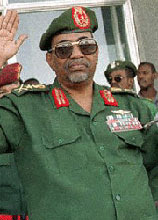
The horrific and heart-wrenching quote above shows just how serious the situation has become. Chad is accusing the regime of Omar Al-Bashir in Sudan of supporting the rebels. Bashir, a military dictator who is among the most repressive leaders in the world, is also suspected of arming and supporting Arab militias in Darfur that continue to committ atrocities and genocide against the black African population.

Interestingly enough, a peacekeeping force from the European Union was set to arive in Chad with a mandate to protect Darfur refugees when the rebels began advancing on N'Djamena. Perhaps the Sudanese regime is trying disrupt the progress of a solution to the Darfur conflict. Back in 2006, a "peace accord" was agreed upon by the government only to be violated repeatedly.

United World analysis:

As the Presidential Election nears, we are sure to be hearing about important issues that will be politicized and used to score points with voters. Just look at all this talk about an "economic recession" and the continuing obsession with all things negative in Iraq. Interestingly enough, oil prices have fallen since the fighting began raging in Chad, supposedly over economic worries. Seeing as the central African nation is a major oil producer, the "speculators" should be a lot more concerned about rebel militiamen seizing control of an oil-producing nation than the "recession" so many in the media are hoping for. Not to make this a pro-Bush post, but there's little doubt that a recession is taking priority over Africa's woes because it can be used as another example of a failure by the Bush Administration. The horrific events happening in Chad today can only be blamed on the rebels carrying out the the assault and the international community that will more than likely stand by and do nothing to stop it.

Monday, February 4, 2008

The "right" has gone wrong


We have breaking news here at United World...Ronald Reagan is no longer relavant. If the man is mentioned one more time, I don't know what I'll do. These propaganda attacks by right-wing commentators like Anne Coulter, Sean Hannity, and Rush Limbaugh against John Mccain are ignorant and unwarranted. Mccain is a good man who has much to offer. He has the ability to serve as the uniter this country so desperately needs (yes, that is a "United World Endorsement").

There's no question that Senator Mccain has split with the conservative movement and Republican Party on numerous occasions. However, that's not necessarily a bad thing. With the events happening around the world (see the two posts below), meaningless issues like gay marriage and tax cuts don't really matter in the bigger picture. Hopefully, all of these angry conservatives will realize that.

To sum it up, I have a link to the latest article from author and Front Page Magazine contributor Kenneth R. Timmerman. In it, he makes a pretty good point about what the most important issues are, inlcuding the Islamic Republic of Iran, Al-Qaeda, and Vladimir Putin's Russia.

While I don't always agree with them, I've always admired Rush Limbaugh and Sean Hannity for standing up for what's right. Today however, it looks like they are focusing more on the ideology of "conservatism" than the things that matter.

Saturday, February 2, 2008

When homicidal maniacs hijack a religion...

Well the news that has been come out of the Muslim world these last few days has been very disturbing. In December, I wrote a post about an assassination attempt on a Pakistani government minister who was attending prayers inside of a mosque. Scores of people died in that bomb attack, and these next examples are certainly no better. One happened in Iraq, the other in Afghanistan.

Yesterday in Iraq, two disabled women were strapped up with explosives and detonated by remote control in two Baghdad markets, killing almost 100 innocent people in what was perhaps the most brutal terrorist attack in over 9 months in the Iraqi capital. The obvious question we should all be asking is 'why', but we should also be wondering why the inhuman mass murderers behind the attack weren't willing to send one of their own "martyrdom seekers" into the crowd. Perhaps it is because they are simply running out of bad guys, or maybe its because they are too afraid, or it could be because they are desperate to find a way to destroy the amazing progress that has been made in Iraq in recent months. Just the same, those who continue to suggest that the Iraq conflict is nothing more than civil war are not only wrong, they are ignorant. To say that ordinary Iraqis or Muslims would committ such an evil act is insulting to the people of that country, their culture, and their religion.

In Afghanistan, an equally horrendous act was committed when a Taliban suicide bomber blew himself up inside of a mosque in the southern city of Lashkar Gah on thursday, killing the deputy governor of Helmand Province and five others in what the provincial police chief described as "totally against our religion". It follows a pattern of similar attacks in the region, including the one in Pakistan that was mentioned earlier.

These barbaric attacks are only the latest in a series of events that have been happening around the world in regards to the war on terrorism. Just look at the assassination of Benazir Bhutto, the Algiers bombings, and the siege of Mogadishu in Somalia in addition to the terrorist activities that continue in Iraq and Afghanistan. Some may deny it, but all of these events are connected to the broader war on terror in some way or another.

Tuesday, January 29, 2008

Kenya fighting rages on


Violence in Kenya has taken a turn for the worse with Tuesday's assassination of an opposition lawmaker who had been working to end the crises. Ethnic militias armed with machetes continue to terrorize the slums of the capital Nairobi and towns across the country's west while the death toll in the fighting has topped more than 850.

Lord Mark Malloch Brown, who visited Kenya from the UK, issued a serious warning about the crises:

"We are greatly concerned at what we see as a step change in the violence from something bloody and ugly but perhaps spontaneous to something much more organised and sinister,"
He continued on to say:
"What is so alarming about the last few days is that there are evidently hidden hands organising this now. Militias are appearing, street gangs are being organised."
I hope I'm wrong when I say this, but this kind of violence seems all to familiar. In 1994, sporadic violence between Rwanda's Hutu and Tutsis ethnicities quickly spiraled out of control and became the infamous Rwandan Genocide, where over one million people were slaughtered across the country. Since then (and even before) this type of violence has reciprocated again and again in Africa, whether it be Rwanda, Darfur, Eastern Congo, South Sudan, or Somalia. Kenya's current situation may very well find its place up there if the conflict is not peacefully resolved and the machete-wielding militias are not disarmed.

Tensions grow next door:

While not really related, violence is also being reported in neighboring Somalia with the continuing street battles between Ethiopian/Somali coalition forces and Islamic insurgents armed with machine guns and rocket-propelled grenades. Yesterday, two foreign aid workers and a Somali journalist were killed when their vehicle hit a roadside bomb outside of Mogadishu. Kenya, which was once one of East Africa's most prosperous democracies, had the potential to serve as a role model to the struggling UN-backed government in Somalia. Kenyan forces have also wielded positive influence in the capture of Islamic militants along the border.

What can we do?

One of two things needs to happen in order to stop this from becoming the latest "Never Again" pledge. Either the people of Kenya must agree to put aside their differences and solve their problems through dialogue as opposed to the blade of a machete, or the UN and the international community must step in and do something before the militias become too powerful and the bodies of innocent men, women, and children begin piling up in the countryside. Leaders here in the U.S. need to play a constructive role as well. Senator Barack Obama, who is of Kenyan descent, has been actively involved in pushing for dialogue and an end to the killing. If everyone in Congress did so, it would certainly send a strong message. Today's violence in Kenya is a perfect example of how we can all put aside our political differences to work together and impact the world in a positive way.

...or we can continue doing what we're doing and have another "never again" pledge that we failed to live up to and add it to the pages of history.

(Photo courtesy of AP)

Sunday, January 27, 2008

Reuniting the United Nations


Saturday's UNA meeting in Berkeley brought up a lot of debate and discussion over the issue of human rights here in the United States and around the world. Many issues were brought up--including the use of child soldiers in Africa and the growing number of executions carried out by China and Iran. But the meeting also touched on the issue of human rights here in the United States regarding detainees captured in Iraq, Afghanistan, and around the world. One of the guest speakers featured at the event was an American ACLU attorney who talked about the apparent use of torture, including water boarding, and how it hurts the image of the United States abroad. His message was that if the U.S. violates international law, then other countries could follow suit as well. At the end of the event, I had the opportunity to voice my opinion.

United World Analysis:

While I am largely opposed the idea of the U.S. government using torture or harsh methods of interrogation, I am just as opposed to the usual "blame America first" rhetoric. Since 9/11, the world has faced a stateless enemy that works to achieve its goals by killing innocent people--civilians, westerners, and Muslims alike. Last month, the UN headquarters was targeted by Al-Qaeda in the Algerian capital, Algiers, so its pretty clear that these people are perfectly willing to attack anyone--whether it be the UN, the US, or Muslims who fail to submit to their extreme ideology. If the world can put aside current political disputes, then its very likely we can all move forward together in the fight against global terrorism. Exploiting the mistakes of the USA among the international community is counter-productive, and there's little doubt that terrorists enjoy seeing the US and the members of the UN tear themselves apart from the inside out.

Nevertheless, the other superpowers in the world have an obligation to uphold their commitments to the Declaration of Human Rights. Look at what is happening in Russia right now, where political opponents have been systemically assassinated and democracy has fallen into its death throws.

This is only the most recent example:

From Reuters:

MOSCOW (Reuters) - Former Russian Prime Minister Mikhail Kasyanov was barred on Sunday from running for president in a March election, a move he said was taken to block any real challenge to Kremlin chief Vladimir Putin's chosen candidate.

The Election Commission's decision seemed certain to stir fresh criticism by Kremlin opponents that the March 2 vote has been slanted in favor of Dmitry Medvedev, 42, the first deputy prime minister who Putin has backed to be his successor.

Kasyanov, who had little chance of winning the election, said Russia under Putin was now on "the slippery slope towards thievish totalitarianism" and urged a boycott of the vote.

Is it really fair to single out the United States while Vladimir Putin and his KGB buddies continue their stranglehold on Russia? I recently read a book entitled Blowing Up Russia by Alexander Litvenenko, a harsh critic of the current regime in Russia. Unfortunately, Mr. Litvenenko was killed in London before the book was released at the beginning of 2007. Other prominent critics have met a similar fate as well.

The Chinese aren't much better either, with their continued support for the blood-soaked regime of General Omar Al-Bashir in Sudan. Over the last few years, the Chinese have routinely blocked the UN security council from imposing sanctions on Sudan because of their growing economic investment in the country. It may be fitting to entitle the 2008 Beijing Olympics "The Genocide Olympics". I think its safe to say that China's support for a government that has allowed for the unrelenting slaughter in Darfur to continue is one of the worst human rights abuses in recent years. In addition, Russia and China continue to protect Iran from UN action as well.

So in the end, while it can be said that the United States has set a bad example for the international community through its sometimes controversial treatment of detainees, the other countries who wield tremendous influence in the UN need to be held accountable as well. There is no excuse for the UN to scold the USA while Vladimir Putin tracks down and kills his political opponents in Russia and China continues to support the world's most brutal dictator. The key is for everyone to work together for a more affective United Nations, which was the point I made when I had my opportunity to speak at the end of the event.

Friday, January 25, 2008

Pushing for progress

I will be heading to Berkeley tomorrow for a UNA-USA (United Nations Association) meeting. One of the big issues that will be up for discussion will be the issue of human rights around the world. Several guest speakers, including an ACLU attorney, we be there as well. I plan on suggesting an idea for a resolution to the board of directors. Basically, I'd like to come up with a resolution pressing for unity among the international community regarding the situation in Iraq.

Seems like it would be a lot of work right? Well, that's what I figured when I took a trip to Europe last Summer. One night, when I was in Dublin, Ireland, I got the opportunity to have several drawn out political debates while I was having a drink at one of the pubs. Obviously, its no secret that Europeans are very unhappy with the Bush Administration and America's current standing in the world. However, we seemed to agree on one thing: that it would be best for everyone if their is success in Iraq. Now, they don't believe that will happen, at least not so long as Bush is in the White House, but everyone seemed to agree that a stable Iraq would be a good thing. During my three week stay over there, I never felt like anyone I exchanged views with actually wanted to see failure in Iraq just to make George W. Bush look bad. In the end after all, that's not what this is about. This war, to me, is about taking a stand against genocide, terrorism, and tyranny. I continue to believe that Iraq, and Afghanistan as well, will be much better off if the international community around them sends a message to the extremists that we will all work together and will not be divided.

So maybe it is possible. Maybe one person can make a difference. Among other things, I'd like to bring up the situation in Russia, as well as Myanmar and Sudan, where the long list of human rights violations is growing everyday.

Tuesday, January 22, 2008

Congo tragedy takes its toll...


A new report has been released suggesting that over 5.4 million people have died in Eastern Congo since the conflict began in 1998 (previous estimates suggested 4 millio had died). The report also says that over 45,000 are dying every month...45,000! That comes out to around 1,200 a day. Assuming this is correct, the jungles of sub-saharan Africa are the setting of the bloodiest conflict since WWII, when the Nazis killed over 9 million Jews and other Europeans in the Holocaust.

...and all we can do is sit back and do nothing, just as we've done with Darfur and just as we did with Rwanda. This tragedy, however, outstrips both of those conflicts combined. Even if you include the most extreme estimates in the Iraq War as well, the numbers don't even come close, although it should be noted that Congo's slide into despair is partly due to the ongoing ripples of the Rwandan Genocide almost 14 years ago, when the militias that had left nearly a million bodies in their wake were driven into the Congo to continue their killing spree.

In addition to genocide and war, many groups roaming the lawless region are also seeking to exploit Congo's vast minerals and natural resources. Children continue to die from easily preventable diseases, and untold thousands are perishing every month because of hunger.

But what does it matter to us? It's only Africa after all...