Showing posts with label Iraq. Show all posts

Thursday, April 9, 2009

The Iraqi blogosphere + Israel and Palestine debates = Mayhem

While we have watched Iraqi Prime Minister Nouri Al-Maliki and the people of Iraq triumph in the face of terrorism, there is another struggle, maybe even a war, that is taking place, and it is happening in the Iraqi blogosphere.

First, my friends over at Iraqi Bloggers Central have announced they are closing their doors. While this is a bit depressing, I am very happy for them...they have run the blog for 5 successful years. I don't always agree with them--particularly Mr. Ghost, but nonetheless they have all at one time or another done something to help Iraq and its people. Jeffrey, the most frequent poster, has noted there has been a decline in English-language Iraqi blogs...my link list has quite a few of them, I might add. But on the other hand, there is a growing number of inactive Iraqi bloggers, as evident by the growing list on IBC.

Speaking of which, those blogs that have been a good read are experiencing some trouble. Iraqi Mojo has always been one of my favorite Iraqi bloggers with his spot-on analysis of the situation in Iraq and willingness to stand up for what is right. Today though, the blog has been overrun with haters, many of which come Healing Iraq, a run-down, inactive site that was run by Zeyad Kasim, who also had some good thoughts to offer at one point. Anyway, Mojo's blog has been the center of a debate that tends to invoke nothing but hate and anger for 60 years: Israel and Palestine.


A residential neighborhood in Ramallah, the capital of the West Bank. Anyone who knows about the debate knows that this is a frequent battleground between Israelis and Palestinians.

The lines have been drawn over at Mojo's, and commentators who were once friendly with each other are know bashing each other, tossing insults around, and getting worked up over nothing because anti-American supporters of the Iraqi "Resistance" like Arab Advocate and his side-kick, Bruno, the Afrikaner, have figured out how to stir up trouble and get their sick kicks. In the year and a half I have been commenting at Mojo's, I have been able to avoid the discussion...I always feared that because I vehemently stand beside Israel's right to exist and believe that Israel offers light in a region overrun by darkness I would forever be labeled a "Zionist", a "Zionut", or as some haters will say, a "fascist", or a "Nazi", words which I believe are deliberately used to cause hurt the people of the Jewish Homeland, given their historical significance.

However, when Arab Advocate calls for Israel to be "dismantled"--a codeword for "destroyed"--I have no choice but to speak up. In the midst of my defense, I have been accused of supporting "the deportation of Palestinians to Jordan", supporting Avigdor Lieberman and his policies, supporting the West Bank settlers, and worst of all, not caring about the right of Palestinians. This stuff is so out of proportion I don't even know where to begin. For starters, I am strongly opposed to the settlements and their inhabitants who regularly attack both innocent Palestinians and Israelis who try to protect them. I think they, alongside terrorist groups like Hamas and Islamic Jihad, are one of the biggest obstacles to peace in the region. Not only that, they really aren't any different from each other. Militant Zionists like those mentioned in the above link are just as bad as the Palestinians who fire rockets and mortars into Israel. At the same time, I don't think it makes me "anti-Palestinian" to point out that Jordan, in addition to Israel, snatched up Palestinian land in the first partition. Am I anti-Palestinian when I express my sheer outrage over what Hamas does to its own people? I hope anyone who cares about Palestinians wouldn't think this.

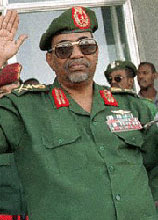
Israel has no doubt done bad things in its 60 years history, while at the same time attempting to offer things that no other country in the region will offer, like free press, democracy, women's rights, and major technological advantages, things that I believe are necessary for any society to truly succeed. Perhaps its difficult for some Americans to focus on the bad things Israel has done because they blindly support Israel for religious reasons--a means to an end, if I may say so. Or maybe its because Israel is surrounded by regimes so evil and repressive, like gender-apartheid Saudi Arabia, Bashir's blood-soaked Sudan, and Big Q's Libya, that it makes the settler violence seem mild in the eyes of the world.

If a fair international forum could exist, Israel would have things to answer for. Unfortunately, its nearly impossible to take the UN "Human Rights" Commission seriously when they give their posts and chairmanships to countries like the 3 mentioned above (Libya, Sudan, Saudi Arabia) and expect the world to take action against Israel. While the Gaza War erupted backed in December, an even worse conflict raged on in the jungles of Sri Lanka...just recently, 60 civilians were blown up by mortar fire but no one cares because this debate does not invoke political passion like Israel and Palestine do. During the the Gaza war, pro-Hamas protests broke out here in San Francisco, believe it or not. I haven't seen any protesters in San Francisco march through the streets waving Tamil Tiger flags and calling for the destruction of the Sri Lankan government, which could meet all the same criteria of being a "racist state" as Israel might. America has provided aid to Sri Lanka and has the Tamil Tigers on their list of terrorist organizations as well.

Recently, on Angry Arab's Comment Section, a blog I often visit, one commentator made a joke about Israeli immigrants moving to India and stealing Indian land, completely oblivious to the fact that India is already being "occupied" by Pakistan and Bangladesh, but I guess maybe its okay for these people because the occupiers are Muslims, instead of Jews. I've seen many of the commentators go after the Hindus of India for being the oppressive ones while falling silent over what Pakistani and Bangladeshi militants have done to India's civilian population. And no, I am not going on an anti-Muslim rant. Any regular reader of this blog would know that I have fiercely defended Pakistan in its fight against terrorism and that its harder to find a bigger defender of the Islamic religion than myself. I just don't think that blatant hypocrisy is fair.

My point in going on about this is that I really wish that people would completely and totally avoid this debate UNLESS they are willing to hear the other side and listen to their concerns. At the beginning of the month, I attended a debate featuring As'ad Abukhalil, the "Angry Arab" and Israeli Consul General Akiva Tor. I was disgusted by the people who claimed to be "Pro-Palestinian"--they were extremely disrespectful to the Consul General by shouting insults and yelling at him when he was trying to speak. Somewhere in the crowd, conscientious supporters of the Palestinian people must have been very embarrassed by what was happening. The event was advertised as though it would be a forum to discuss the issue...it was anything but. While it was very exciting to meet the two speakers, the "forum" managed to attract the worst of American Society.

I have met Palestinians...and I have met Israelis. Sometimes it seems they are more willing to discuss the issues than their supporters in other countries, believe it or not. Unless you are willing to bring your opponent into a cafe, drink coffee, and talk things over, you should avoid talking about anything involving Israel and Palestine for your own well-being and the well-being of others. I've heard that this conflict has wrecked many political careers over its perplexity and inability to be solved...I would say that the debate has wrecked many good and decent friendships over the inability to find any common ground.

Saturday, January 31, 2009

Mission Accomplished

Today was another defining moment for the people of Iraq. Last night, I spoke with several of my friends who live in the country and I was nearly moved to tears as they talked about getting ready to vote. I think it is safe to say that Iraq is ready to be the beacon of hope for freedom and democracy in the Middle East.

Those who wanted Iraq to fail have only failed themselves. Al-Qaeda's roots have been smashed thanks to the courage of the Iraqi people, the Lions of the Iraqi Army, and of course the Surge Strategy implemented by a true American hero, General David Petraeus. As for Saddam and the Baathists, they are nothing but a closed chapter in a dark history.

Iraqi heroes patrol the Tigris River

Usually, when I think about the people who looked down on Iraqis, I think of terrorist scumbags who suicide bombed mosques or Militiamen who trained in the art of torture from a compound outside of Tehran. But we cannot forget people like Harry Reid and the other democrats...I don't want to dwell too much on that. Our country is focused on another crisis, and the last thing we need is more division, but I will stand by this statement: Harry Reid should have stepped down a long time ago after his reprehensible statements.

I am very proud of my president, Barack Obama, for commending the Iraqi people and praising the success of today's elections, which passed free of violence and proved to the world that Iraq, its people, and its freedom are truly a force to be reckoned with. I must say that I am even prouder of the Iraqi prime minister, Nouri Kamal Al-Maliki, who has strong that he is a strong and gracious leader.

The Iraqi people have stood up for their security

But I am most proud of my former president, George W. Bush. I suppose if I ran into him tomorrow, this is what I would say to him:

Mr. President, now that you have stepped aside and are enjoying a calm, quiet life in the Dallas suburbs, remember that you are a real hero. You stood by Iraq's side in its time of need...you outsmarted those who wanted Iraq to fail, from the congressmen who verbally ravaged you day in and day out to the terrorists who arose from the sands of North Africa and Saudi Arabia to inflict terror and fear on the Iraqi people.

The democrats won the election. They got the White House and they consolidated their power in Congress. For now, they have even won the trust of the American people. But each morning, when you and your wife get ready to have coffee, just think of the millions of Iraqi families who are going to live in peace, and the future generations who are going to lead Iraq and the Middle East to greatness. The Democrats never got their new direction. You looked them in the eye and exposed them for the frauds they were when they threatened to cut funding or tie in a "troop withdrawal" to one of their so-called "blank checks" they were handing you.

History will judge you very differently, sir. You will be remembered with heroes of the Middle East like T.E. Lawrence and Benazir Bhutto, except your accomplishments are even greater.

Hhhhh...maybe I need to do some work with it, lol. But that is pretty much what I would say if I met the former president. Anyway, even as the Bush hatred remains solid in this country, there are plenty of images that will show just the opposite.


A bustling Baghdad comes to mind. As George and Laura go about their golden years, I hope that they will find the time to visit it. I've heard reassurances from some of my Iraqi friends that they will be warmly welcomed one day, and I trust this will be true.

Bush did a great thing for Iraq, for the world, and for humanity. It disgusts me when I hear about Republicans who urged the president to give up during the bloodshed that peaked in 2006-07, when Iran, Syria, Al-Qaeda, and the Baathists were hard at work trying to destroy the country. While they all had different goals, the above mentioned thugs seemed to agree that a democratic Iraq was a threat to their despotic way of life.

Another question comes to mind...is Iraq even still a "war"? Obviously, the Iraqi people will always be at war with so-called Islamists who wish to destroy their way of life, but perhaps the media can look at stories coming out of Iraq as something other than "war news".

The struggle is far from over...Iraq is going to serve as a role model for the Middle East, and we will have to wait and see what happens. Iraq's future is just beginning.

Tuesday, January 20, 2009

Welcome to the job, Mr. President

Now don't forget your most important responsibilities.

President Obama has an obligation to keep up the effort in Afghanistan and make sure the gains we have tried so hard for in Iraq do not crumble. If only our President could hear from one of Iraq's potential leaders. He would learn some things he probably isn't hearing much about from his democratic colleagues in Congress.

A few months back I had the honor of interviewing Hayder Al-Khoei, also known as Eye Raki on his blog. Hayder opened up about his recent trip to Iraq, and revealed the progress that is being made. I originally published this story in a local newspaper.

UK College Student Travels to Iraq, reveals the progress being made

Published December 3rd, 2008

Hayder Al-Khoei is an Iraqi-born college student living in London, England, and studying political science. Recently, he interviewed with the Experience about his recent trip to the Middle East, where he spent several weeks in Iraq. Traveling between Baghdad and southern Iraq on his own, he was able to get a good picture of the progress achieved by the Iraqi Army and the newfound sense of security among Iraqis—as well as lingering concerns the country is feeling about the future.

Hayder is the 21-year old son of Sayyid Abdul Majid Al-Khoei, an influential Shiite cleric who was assassinated in Najaf in 2003 while trying to serve the will of his people. When he was very young, Hayder left his homeland of Iraq with his family after the 1991 Uprising, and he has spent most of his life living in the UK. He hopes to return to the Middle East permanently in the future, after finishing post-graduate studies in London. I was fortunate enough to learn about his most recent trip to Iraq, where he traveled to Baghdad after a two weeks stay in Iran. His trip later concluded in Amman, Jordan.

"The relaxed atmosphere I saw was very different" he said. "I was in Iraq earlier this year too, but this time I could tell a lot had changed. In many parts of Baghdad, people stay out late at night to drink tea and smoke nergila. That doesn't sound so strange to the average American, but in Iraq, when you can see families out at night enjoying themselves it says a lot about the current security situation".

The biggest differences Hayder noticed were the little things, such as taking a taxi from Baghdad International Airport to the Shiite holy city of Najaf at night, something that was considered dangerous as little as six months ago. Lack of electricity and militiamen roaming the streets could make a deadly combination. But this time, the taxi driver said the 3 hour trip down south would be no problem.
But still, not everything is perfect. Hayder noted that Iraq's electricity production levels still present a huge difficulty, and will need a lot of work to truly meet the needs of the Iraqi people. "Electricity is still a big problem. Having no electricity is not only an unbearable inconvenience in the heat but it means roads can be extremely dangerous to travel through at night," he said.

Iraq's future also faces a growing threat from the Sahwa—Arabic for "Awakening". They are Sunni tribal councils that have been critical in routing Al-Qaeda from Anbar province and other areas of the country. Some fear the Maliki government could try to disarm the Sahwa, reigniting sectarian tensions that extremists tried so hard to set off. Hayder believes that the Sahwa's threats of rebellion should be taken seriously. If the government fails to integrate most of its 100,000 strong militia into the Iraqi Security Forces, it could jeopardize the many security gains Iraq has achieved. Recently, Maliki's government agreed to take the reins from the US military and pay the Sunni Arab tribesman themselves.

At the same time, great progress has been achieved. The government of Nouri Al-Maliki, Iraq's prime minister, attained a defining moment this year when the Iraqi Army faced off with the Jaish Al-Mahdi, or 'JAM', the militia loyal to Muqtada Al-Sadr that fought two uprisings since 2004 and has been a thorn in the side of coalition forces who have been trying to stabilize the region. Despite an image portrayed by the many critics of the war and the media of incompetence on the part of the Iraqi Army, the facts on the ground appear to tell a different story. Maliki's actions helped to shed his title of a "sectarian" leader. Maliki is a Shiite, and he had often been accused of coddling the Shia militias who maintained control of entire swathes of Baghdad. After multiple crackdowns against Al-Qaeda and other Sunni extremist groups in the north, the Iraqi government finally brought the fight to the Shia extremists, many of whom are suspected of mass kidnappings, executions and brutal torture methods involving drills and other weapons.

"The Sadrists were begging for the cease-fire," said Hayder, who spent most of his four week Iraq visit in the southern part of the country. "They really didn't have a choice. They could either continue the fighting and be humiliated by the Iraqi Army, or beg for a cease-fire in order to save face. For a few years, JAM could play ball with the Iraqi Army, but after the three separate successful crackdowns by the Iraqi Army, JAM were reduced to nothing, and were eventually disbanded by al-Sadr, who retained only a few 'special groups' to tackle the coalition forces in Iraq"
According to Hayder's account, Iraqi police commandos maintain a strong presence in the southern Iraqi cities, including Kufa, scene of some fierce fighting earlier this year when JAM and the Iraqi Army faced off. In the end, the once-feared cleric who led two uprisings against US forces may not be the fiery strongman he has always been seen as.

When it comes to the question of the source of Iraq's violence, Hayder does not point to the fact that Iraq is being run by a Shia government—a majority that was once repressed by a favored Sunni majority—for the reason behind the continuing attacks against Iraqis. While the attacks have abated to levels once though improbable, they still persist in some parts of the country, most notably the city of Mosul and the central Diyala Province. American intelligence reports indicate that suicide bombers make their way in from the Gulf States such as Saudi Arabia and unleash their destruction via Syria. Iran has long been accused of funneling arms to support Shiite militias in the south.

"For some of the neighboring countries this isn't about a Shia-led, or a Shia- Kurdish government, there is much more at stake" he said. "The word democracy sends a shiver down the spines of the leaders of those countries. If there was real democracy…many would not be in power today."

Hayder offered his thoughts on the controversial security pact, known as the SOFA, being negotiated between Iraq and the United States. The pact's continuing difficulties have led to speculation that Iraq's newfound ties with Iran could be having a hand in the country's calls for US troops to leave in the coming months. This has become a favorite talking point of the Bush Administration's critics. While he does not rule anything out, Hayder's view on what's happening is that Iraq is trying to assert itself as a sovereign, independent nation. "It's sort of a catch 22 for the Americans because they worked so hard to bring the Iraqi Army up to a good standard...and now, because of all the time, money and effort the US spent on training the Iraqi army, the Iraqi government can tell the US 'thanks but no thanks'. So then really, this is Iraq standing on its own two feet and asserting itself," he stated in his analysis.
The way Hayder sees it; the realities on the ground that suggest a dramatic turn of events in Iraq cannot truly be successful if the success is not recognized.

"There are a lot of people in the US, especially the Democrats, who downplay any success in Iraq simply because they are at odds with the Bush administration, they want to portray Iraq as a failure because they see Bush as a failure" said Hayder, who believes that there should be no correlation between politics and doing what is morally right by helping the Iraqi people. "You can hate Bush if you want, but just admit that what he did in Iraq turned out for the better. Better for Iraq, better for America and better for the world"

Sunday, January 4, 2009

Stuck on stupid


Iran's Supreme Leader, Ali Khamenei, invited Iraq's Prime Minister into his bubble of ignorance today, holding a strongly-worded meeting on the Security Pact known as SOFA and warning Maliki about what he sees as the "treacherous" United States. Khamenei made his usual statements about the US being responsible for everything that is happening in Iraq, and blaming the continuation of violence on US troops that are still operating inside of the country.

Meanwhile, as Khamenei blasted the US, a suicide bomber attacked Iranian pilgrims who had gathered near a shrine in Baghdad, killing dozens of them. The idiot bomber no doubt harbored the same anti-Shia/Persian sentiment expressed by those who have kidnapped and killed Iranian police and bombed military buses INSIDE of Iran's borders. It was the "treacherous" US who joined side by side with Iraq's exiled Shia community (also with Iran's blessing) to overthrow Saddam Hussein. Let's not forget that it was also the "treacherous" US that routed the Taliban, Iran's other nemesis, from Afghanistan...the same Taliban that kidnapped 9 Iranian diplomats back in the 90's, crammed them into a box, and executed them in a hail of gunfire. Things were certainly going great for Iran before the "treacherous" US barged into the region, weren't they?


Iranians inspect the damage after Sunni insurgents, likely based in Pakistan, bombed a bus transporting a Revolutionary Guard Unit.

I'd like to note that I believe the anti-Shiite sentiment that is taking place around the world today is akin to a new form of anti-Semitism. I've heard Baathist sympathizers, right-wing conservatives, and the the so-called "antiwar" movment all express the same anger towards Iran, as well as Iraq's majority Shiite population that played a critical role in overthrowing Saddam Hussein and now maintains a majority in the democratically-elected government. The Shiite Islamic Republic has no doubt been a destabilizing force in Iraq and elsewhere these last few years, but if Khamenei had a brain, he would realize that his country and the United States share many common interests and working together to accomplish them might not be such a bad idea.

What's happening in the Middle East right now is mind boggling, so much so that its difficult for a single mind to try and make sense of it all. Its sort of like trying to figure out how the Universe came to be and what lies beyond it...its enough to drive someone mad.

As if the above story isn't enough, have a look at this post from my good friend Iraqi Mojo about the situation in Gaza and the hypocrisy among the "resistance".

Thursday, December 18, 2008

The making of an Iraqi hero

At the beginning of the year, I remember reading a story both tragic and inspirational.


On January 6th, 2008, Iraq held a parade honoring its military. Crowds gathered along the streets to see the powerful Iraqi Army show off its skills. Lurking in the crowds was a suicide bomber determined to turn what was supposed to be a day of patriotism into a bloodbath. As the bomber pushed deep into the crowd, two very brave Iraqi soldiers spotted him. Knowing something was wrong, they threw themselves on top of the terrorist, wrestling him to the ground. The attacker managed to set off his explosive belt, killing the two soldiers and 9 bystanders, although it could have been far worse if the bomber had not been confronted. These two Iraqi patriots--the soldiers who gave their lives knowing what was going to happen to them--are heroes.


And yet, they are nameless and largely forgotten. Instead, an angry shoe-tossing journalist is built up as a "hero". While the Iraqi Army and police are volunteering to protect their country, a man who attempted to assault a foreign leader is given prestige and honor he does not deserve. To Muntathar Al-Zaidi, I ask you...how many widows and orphans did that above-mentioned suicide bomber create? If it wasn't for the filthy "resistance" seeping in over Iraq's borders to mass murder innocent civilians, Iraq would be a successful and free society right now.

But I have an even bigger challenge for Al-Zaidi. If he is able to avoid prison time, and he is begging for that as we speak, what will he do if Al-Baghdadiya assigns him to cover a press conference with a Saudi cleric in downtown Riyadh? Better yet, what if Saudi Arabia re-opens diplomatic relations with Iraq, and Al-Zaidi is sent to cover a press conference between, let's say, President Jalal Talabani and the Saudi ambassador. If Bush deserves two shoes for destabilizing Iraq, then it would only be fair if Al-Zaidi tosses a truckload of shoes at the Saudi ambassador, since that country has turned a blind eye to the hundreds of suicide bombers who have crossed over the border into Iraqi towns to mass murder innocent civilians and continues to export Wahabbi fundamentalism across the region, which creates exactly the type of sub-human murderers mentioned at the beginning of this post.

As beautiful as it might seem, as many as 61% of suicide bombers in Iraq are said to come from Saudi Arabia, according to the LA Times.

Al-Zaidi also claims to have visceral hatred for Iran. But remember, President Ahmadinejad made a trip to Baghdad earlier this year and Zaidi's shoes stayed on his feet during that trip. Just think of all the Iranian-backed death squads who have terrorized Iraqi civilians. The journalist feels he can place all of that blame on George Bush. If it wasn't for Bush, Zaidi wouldn't be reporting freely on subjects, and if he had thrown that shoe at Saddam, he would have gone through a wood chipper by now...if Saddam chose to go easy on him.

There are many forces that are actively trying to destroy Iraq today, and many who were doing so before 2003. If all of them were to get the shoes tossed at them they desrve, there wouldn't be any left over to throw at George W. Bush.

Sunday, December 14, 2008

Some thoughts on Bush's legacy

I, along with many others, watched on TV the spectacle in Baghdad where Iraqi journalist Muntathar Al-Zaidi hurled his shoes at President Bush during a news conference with Prime Minister Nouri Al-Maliki. Some find this comical, others find it obnoxious and rude, but I found it to be a perfect example of the freedom and the courage that the Iraqi people have, as they take control of their country and stand up against those who want to destroy it. If Al-Zaid had done this to Saddam Hussein, it can be said with almost absolute certainty that the Iraqi journalist would be bound and gagged in a Republican Guard Compound. Across from him, Uday and Qusay would be blazing up a box of cigars as their Fedyeen minions chopped off his feet and served them on a silver platter to his grief-stricken family. Instead, Zaid had the chance to make a political statement to the world and live to tell about it.

I have given up all hopes that President Bush is going to leave office with a better public image than he’s had these last five years. I think this is very unfortunate, but at the same time, I will never back down from believing he has done the right thing, even though it has cost him the media-touted “approval rating” that far too many of the President’s critics have used against him.

Bush stood against the misguided message an American population swayed by poor media coverage conveyed to him after the 2006 midterm election, when “Bush lied, people died, so get-the-hell-out-of-Iraq” fervor was on a rampage across the world. He wouldn’t give up, he was not going to walk away from his mission to bring freedom to Iraq and forever liberate it from the most horrendous forms of human life. Even as his approval rating was crushed, he sent more troops to Iraq to work directly with the besieged people of Iraq, and they have succeeded. Barack Obama may be the president now, and the genocide-advocating Democratic Congress may have followed suit—but their message failed. The “new direction” in Iraq they pushed for went down in flames as the lions of the Iraqi Army and the Awakening councils drove the insurgency all the way back to the sands of Saudi Arabia and their sanctuaries in Iran. Harry Reid was left looking like an utter buffoon as he desperately tried to prolong the struggle, accusing General Petraeus of being in the tank for the Bush Administration while citing the Pope, who has never set foot in Iraq, as a legitimate source that nothing good was happening in the Land of the Two Rivers. I almost want to say its too bad no one was there to throw a shoe at him back then, but such behavior should be rightfully condemned, no matter how much they might deserve it.

Bush has courage, unlike many other politicians. The Democrats were able to win the election, but this time, they avoided the so-called "antiwar" movement like an infectious disease, choosing to verbally assault the President on the economy instead, a crisis which they are just as guilty for as he is.

Sometimes, those who want to do the right thing don’t receive the response they deserve. Just think of Bob Marley, who tried to bring his message of peace and hope to the people of war-ravaged Jamaica only to be shot for it. Last year, Benazir Bhutto returned to Pakistan to use democracy as the greatest weapon against terrorism and perverted religious fundamentalism. Even before she landed, the Taliban already had suicide bombers waiting to welcome her in the crowds. President Bush had a very insignificant encounter, in the grander scheme of things.

Bush has given everything he has to do the right thing. He corrected the terrible mistake his father made in 1991 when the Gulf War was abruptly ended and the Iraqi people, who revolted against Saddam in 14 of Iraq’s 18 provinces, were left to die in a scorched-earth holocaust when the Republican Guard came down on Karbala and literally burned it to the ground. Clinton added insult to injury, slapping Iraq with sanctions, which Saddam used to further his campaign of genocide against his own people.

Ten years from now, when Iraq is being led by a well-educated and determined generation shining and bustling with life, the history books may judge Bush differently. I hope so.

Thursday, October 23, 2008

Iraqi Security Forces take control of Babil Province

From the BBC:

Iraqi forces have been handed control of security in the province of Babil by the US military.

It is the 12th of Iraq's 18 provinces to be handed back to Iraqis.


Congragulations, Iraqis! !مبروك

Saturday, October 18, 2008

A new dawn rises over Anbar


...and the sun has set for the forces of terrorism who worked so hard to destroy it. At least that's the way it seems now that the Iraqi security forces are running things and the Marines who have trained them look back on a job well done as they get ready to go home.

I think its safe to say that there was very little hope for Iraq's Al-Anbar province between the 2004 Presidential election and Saddam Hussein's execution in 2006. If there was one city the so-called "antiwar" movement could point to as proof that Iraq was a lost cause, Fallujah was that city. But by early next month, the US Marines will be completely withdrawn from the city and most of the other cities in Anbar Province. Of course, most of the media has continued its scorched-earth policy regarding positive news in Iraq, and is instead focused on Muqatada's rallies in Baghdad.

Maybe Mookie should take a deep breath, because it looks like the Iraqi people are taking their country back...and the Marines are doing everything they can to help them.

Marines begin withdrawal from Iraqi cities.

WASHINGTON — When Marine Maj. Gen. John Kelly deployed to Iraq in February, the violence had fallen so low in Anbar province that he began figuring out how to start closing bases and prepare to go home.

In the last 10 months the Marines in Fallujah have done what was unthinkable before the surge began — they have quietly transferred out of one of Anbar province's largest cities. FOX News has learned in an exclusive interview with Kelly from Fallujah that 80 percent of the move is complete. In February there were 8,000 Marines living at Fallujah base. Now there are about 3,000 left. By Nov. 14 there will be none.

"We will shut down the command function here and I will move; my staff has already started to move," Kelly, the commander of Multinational Force-West, told FOX News in an exclusive interview via satellite. "We will turn the lights off here."

They will hand the Fallujah base over to their Iraqi counterparts on Nov. 14, having relocated themselves and thousands of combat vehicles to the desert base of Al Asad to the west. Marines will no longer be seen in city centers such as Fallujah — a major step toward leaving Iraq, and one step closer to Iraq's goal of having U.S. troops out of its population centers by mid-2009 — one of the key points enshrined in the Status of Forces Agreement being reviewed on Capitol Hill today.

On Wednesday, to little fanfare, the Marines quietly closed down Al Qaim base near the Syrian border. Now it is run by Iraqis.

In Fallujah, where the U.S. Marines once had three large mess halls to feed troops, they are now down to one. The Marines have quietly disassembled the entire infrastructure of the base.

"We probably had several thousand of those large metal containers — tractor-trailer containers," Kelly said. "I bet we don't have 200 of them here now."

Of the thousands of vehicles once parked at the base, now there are only 300 left. Their transfer occurred at night, between 9 p.m. and 5 a.m., over the past 10 months so as not to disturb Iraqi drivers and clog the roads.

They dubbed it "Operation Rudy Giuliani" because they were cleaning the streets up and returning Fallujah to normalcy — taking down barbed wire and tearing down checkpoints and Jersey walls that made Anbar look like a war zone.

"There is almost no barbed wire left anywhere in Fallujah," Kelly said. An Iraqi no longer sees barbed wire when traveling in and around the city.

Between 300 and 400 concrete barriers that divided the city were removed by Navy Seabees.

One of the big changes Kelly made when he took command in Anbar was to remove fixed checkpoints, and Iraqi vehicles no longer had to pull off to the side when a military convoy was on the road. His troops risked car bombs, but the gamble paid off in what had once been Iraq's most dangerous province. The new road rules instantly lowered the tension between military and locals. Soon he transitioned to moving military convoys only at night, so they would not encounter locals. This also stymied many of the insurgents laying IEDs or roadside bombs, which they often had done at night.

Another change for the better since Kelly arrived in February: He pushed the central government to provide more fuel to the people of Anbar, so the mostly Sunni population is now happier. In February, Anbaris were receiving only 8 percent of their allocation of fuel from the central government of Prime Minister Nouri al-Maliki. Now it's 90 percent — eliminating one of their main gripes.

But perhaps the biggest sign that the situation has changed for the better for Sunnis living in Anbar: With the help of the Marines and the Iraqi police, nearly 100 percent of the eligible voting population were registered a month ago to vote in upcoming provincial elections.

The rest of this story can be viewed here.

Sunday, September 14, 2008

Who's the real enemy?

This post is a plea to the people of Iraq. Anyone has read any history of the Middle East obviously knows that Israel and the Arab states are historic enemies. A member of Iraq's parliament, Mithal Al-Alusi, could face prosecution for visiting Israel to attend an anti-terrorism conference. While the two state may have their differences, there's no question that Israel and Iraq face the same common enemy: political fundamentalists justifying murder under the religion of Islam. In fact, Al-Alusi's two sons were murdered at the hands of terrorists in Iraq.

Iraqi soldiers take part in a counter-terrorism drill.

The terrorists who are capitalizing off of this violence will never be defeated unless the countries of the world can find away to put aside their differences and confront them.

Sadly, two of the lawmakers pushing for Al-Alusi's punishment are Sunni and Shia. This is not how unification should work. Personally, I think that Maliki's government is getting way to close to the regime in Tehran. Iraq will forge a relationship with a country it fought a bloody 8-year war with, in addition to Iran's support for extremists in southern Iraq, but apparently its too much to cooperate with Israel in fighting terrorism. For the sake of a peaceful future for the Middle East, Iraqi lawmakers should drop any and all charges that might be coming against Al-Alusi.

Iraq punishes MP for visiting Israeli conference

by Jpost and AP

Iraqi legislators said Sunday that parliament had voted to lift the immunity of a Sunni Arab lawmaker who visited Israel.

The parliament has also banned Mithal al-Alusi from traveling outside Iraq or attending parliamentary sessions, they said.

Sunday's punishment was confirmed by Osama al-Nujeif, a Sunni Arab lawmaker, and Haider al-Ibadi, a Shi'ite lawmaker.

The two men said Alusi's trip was illegal and a humiliation for Iraqis who see Israel as a historical enemy. Without parliamentary immunity, Alusi could be subject to prosecution.

Alusi, chairman of Iraq's Democratic Party, Mithal al-Alusi, surprisingly arrived at a conference on terror in Herzliya last Wednesday, calling for the establishment of a joint intelligence network with Israel and the United States.

"In Israel, there is no occupation, there is liberalism," Alusi said to the sound of roaring applause.

Alusi made his first trip to Israel in September 2004 to participate in a counter-terrorism conference. Apparently as payback, extremists murdered his two sons, 22 and 30.

The terrorists "will try to kill more. They will try to stop us. It should give us power to continue, to believe in ourselves," he told The Jerusalem Post in an interview at the time.

Alusi was given the American Jewish Committee's Moral Courage award following his sons' deaths.

Iraq could benefit by following India, which is seeking Israeli help in curbing a resurgent militant threat in Kashmir. What does either side have to lose right now?

Saturday, June 21, 2008

The friend of our enemy is our friend...the complex and ironic relationship between the United States, Iraq, and Iran

While writing this post, I was unable to get the lyrics to Bob Marley's renowned song One Love out of my head...it just seemed so fitting, yet so far off (Okay, I was actually playing it on my iTunes).

The position that Iraqi Prime Minister Nouri Al-Maliki and the Iraqi government are currently in is quite an interesting one. Just think, recently, on a trip to Iran, Maliki visited the tomb of Ayatollah Khomeini, while not long before that, he was over here in the United States visiting with the families of U.S. service members getting ready to deploy to an Iraq, something the Iranians are vehemently opposed to--and make clear on a daily basis. I often wonder to myself why this question is not asked more often. Sure, it does come up, but seriously, look at these two pictures below.


Here, PM Maliki is meeting with President Bush, with the flags of Iraq and the United States proudly displayed across from one another. The Iraqi government has reiterated its support for American troops to remain in Iraq to counter the insurgency, rebuild the country, and set it on the right path towards democracy. American currently has over 150,000 troops in Iraq, and even with an upcoming presidential election, that number is unlikely to be greatly reduced anytime soon (even if Big O becomes the next president, I think he'll even acknowledge the importance of staying in Iraq)...and this is at the request of a democratically elected government headed by the Islamic Da'wa Party, of which PM Maliki is a member of.

And who is one of Dawa's biggest supporters: Iran.


That is right--Iran. Here, you can see Maliki and Iranian President Mahmoud Ahmadinejad holding hands in brotherly affection. I couldn't imagine that Ahmadinejad is not well aware of the fact that his Iraqi brother has stood by the side of President George W. Bush, whom Ahmadinejad routinely attacks, and vise-versa. Indeed, Iraq is in quite a precarious position between what the United States has labeled as "The Axis of Evil" and what the Revolutionaries in Iran have labeled as "The Great Satan".

On his recent trip to Iraq, Ahmadinejad stated that it was a good thing to see Iraq free of Saddam Hussein...okay, so who does he think removed Saddam Hussein? It certainly wasn't Muqtada Al-Sadr, or any other Iraqi nationalist figure with connections to Tehran. In fact, this is often tied into the debate over whether or not the United States should have gone into Iraq...some critics of President Bush believe he empowered the Iranians by removing Saddam Hussein, and there is no argument that Iran's influence in the region has grown without Saddam's regime on its western border. Yet for some reason, relations between the United States and Iran could not be at a lower point, never mind that both of them have benefited from the removal of Saddam's Hussein's regime in Iraq, as well as the ousting of the Taliban in Afghanistan, where the United States and Iran actually worked together! Much like the Government of Iraq, Afghan President Hamid Karzai is also a strong supporter of the positive influence he says is coming from Iran and the United States.

So here's what I am wondering. First off, why won't the American and Iranian government face the reality that is inconvenient when the two nations trade barbs, accusations, and threats at each other? Second, why can't Maliki and Karzai bring this issue up, whether they are walking down a red carpet outside the White House or at a receiving ceremony in Tehran? If Iran and the United States truly see Iraq and Afghanistan as strategic allies, then perhaps it is time they trust them to play a much needed role as mediator...a positive role at mediation amongst allies could be the difference between more violence, conflict and war, and a partnership that could prove to make the world a better place in the end.

The United States and Iran will not be able to settle their differences on their own...the leaders of both countries have gone out of their way to make it as difficult as possible, unfortunately. Just look at the recent breakdown of U.S.-Iranian talks on Iraqi security. However, this appeal I am making is to the allies of both countries. A mention of this at a press conference by Al-Maliki or Karzai (whether they be with Bush, the next U.S. President, Ahmadinejad, or Khamenei) would certainly put the issue to the forefront, because it is a reality that cannot be ignored while Iran and the United States battle it out on many fronts to achieve power on the world stage.

Saturday, June 14, 2008

Iraqis rally around their soccer team


Iraqis are rallying around their soccer team after Iraq's victory against China. Even amidst futile attempts by terrorists and thugs to sabotage the happiness in Iraq, Iraqis are demonstrating just how strong they stand.

TIANJIN, China, June 14 (Reuters) - Iraq kept their 2010 World Cup hopes alive and buried those of China after Nashat Akram's second half goal gave them a 2-1 win in the third round of Asian qualifying on Saturday.

Emad Mohammed scored a first half equaliser for the Asian champions but it was Akram's 66th minute strike that ensured that Iraq would go into their final group match against Qatar in two weeks with a chance of progressing whatever the result of the Qataris match against Australia later on Saturday.

"The score does not tell the story, this was a difficult game for us especially after going a goal behind," Iraq coach Adnan Hamad told reporters.

"But we are very happy that we delivered on our promise to go back home with three points."

China, who needed to win to remain in the hunt for the second trip to the World Cup finals after 2002, had the best of the game, but after taking the lead in the first half through Zhou Haibin, wasted too many chances and will remain in the international wilderness until at least 2014.

Iraqis, enjoy your victory today in soccer...I hope you will enjoy your victory over the forces of terrorism even more, and we can only hope that will be soon.

By the way, here is yet another example of Al-Qaeda's growing desperation to cause chaos and break the will of the Iraqi people. Much thanks is to be owed to the brave policeman who is mentioned in the above link.

Wednesday, June 4, 2008

Barack Obama, Israel, and Iraq

I am already tired of hearing about the presidential election...seriously, you can only listen to so much of it, and it starts to get depressing. I have been trying to watch Fox News and CNN lately and I would say about forty percent of the time, the news is either about Barack and Hillary, fifty percent is about unnecessary stories most informed people would have no interest in, nine percent of the news is about John McCain, and lastly, you could squeeze in just a little bit of international news (which is what I watch the news for in the first place) to make up the remaining one percent. I am no media analyst, but this is the rough impression I get from when I watch the news. There is a reason why I prefer international media--the BBC, the Dawn, etc.

Anyway, this was an interesting story from BBC:

Barack Obama has pledged unwavering support for Israel in his first foreign policy speech since declaring himself the Democratic nominee for president.

He told the American Israel Public Affairs Committee (Aipac), a prominent Jewish lobby, Israel's security was "sacrosanct" and "non-negotiable".

He also said he would do "everything" to stop Iran getting a nuclear weapon.

As the Democrats' primary season ended, Mr Obama received the support of enough delegates to clinch the nomination.

His rival, Hillary Clinton, has yet to concede.

Okay, great...Barack Obama is pledging support for Israel. He has also stated he wants to go after Al-Qaeda in the tribal belts of Pakistan. Now, if only he would make a pledge like this to support Iraq no matter what...and stand beside the Iraqi people, regardless of poll numbers or what his left-leaning base says. I would sleep a lot better if I knew that both candidates--McCain and Obama--were saying the right things on foreign policy. Obama has made history being the first African-American to secure the democratic nomination for president, now I suggest he do something just as symbolic...he should take McCain up on his offer for both of them to visit Iraq and see first-hand the amazing progress that is taking place over there. They could meet with American and Iraqi commanders on the ground, and promise that no matter what, the United States will support Iraq in its battle against Al-Qaeda and Muqtada's boys in Sadr City.

Both McCain and Obama have repeatedly stated they want to unite the country and end "partisan" politics, and I think that a joint visit to Iraq to make a promise to the Iraqi people would be the best way to do that.

Wednesday, May 28, 2008

A sight to see...

Sometimes I wonder to myself why some of the most beautiful places in the world are faced with the most problems. I look at this amazing picture from Karbala, Iraq, and think to myself how excited I would be if I had the chance to travel there...yet for some reason, amid all those crowds of devoted Shiite worshippers heading towards the mosque, there are forces somewhere in that city that are determined to make it more dangerous and less safe for not only aspiring visitors like myself, but the people who view it as a central part of their religious practice. The idea of Mahdi Army splinter cells planting IED's on Karbala's streets is more than a bit unnerving.


The saddest part is that many of these people (the terrorists and militias) are making it more dangerous in the name of the very religion they end up oppressing. Just think of all the Karbala residents who are afraid to leave their homes for fear of being caught up in a rival militia battle or and Al-Qaeda inspired car bomb attack. By all means, they need to be stopped, so that beautiful culture like the photo above can be appreciated by people the world over. Let's pray that the Iraqi Security Forces and their American allies succeed in routing terrorism from Iraq once and for all. That is closer to happening everyday, but it will take time, and the best way for it to succeed is if we can all stand united together.

I know I have been talking about Iraq a lot lately (my last few posts), but I would like to make the plea once again for everyone to forget about politics or their opinions and think about what's right. Some of you may be the fiercest Bush critics out there, but it doesn't change the fact that you should applaud the Iraqis for fighting against terrorism and feel a sense of happiness when positive news starts coming out of Iraq.

Thursday, May 22, 2008

Bringing some good news to the forefront

Things haven't been positive lately. If you turn on pretty much any news program today you are probably hearing about how "hopeless" things are. Waking up to news every morning and seeing that oil and gas prices have risen to new highs and the the outlook for the economy is "bleak" could certainly give someone the impression that there are few reasons to be looking up.

However, if you push past the morning news and the words coming from politicians who are seeking to translate these issues into votes, you can see that there are some good things--very good things in fact--that are happening.

Consider this...

From Timesonline:

Iraq dramatically increased the official size of its oil reserves yesterday after new data suggested that they could exceed Saudi Arabia’s and be the largest in the world.

The Iraqi Deputy Prime Minister told The Times that new exploration showed that his country has the world’s largest proven oil reserves, with as much as 350 billion barrels. The figure is triple the country’s present proven reserves and exceeds that of Saudi Arabia’s estimated 264 billion barrels of oil. Barham Salih said that the new estimate had been based on recent geological surveys and seismic data compiled by “reputable, international oil companies . . . This is a serious figure from credible sources.”

But that's not all. As its reserves grow, Iraq has the potential to reap in more than $70 billion in oil revenues in 2008. A profit like this means that the Government of Iraq can put more efforts into reconstruction and security improvements.

“We need to recognise after so many decades of mismanagement of the oil industry that we need to call a spade a spade,” he told a group of delegates at the World Economic Forum in Sharm el-Sheikh. “We can regulate it, but we need private investment to develop Iraq’s production capacities.” He said that Iraq was pumping 2.5 million barrels of oil a day at present, earning about $70 billion (£35.9 billion) in revenue this year.

Iraq may be receding in terms of news coverage. Success stories in Baghdad--like Operation Salaam, do not tarnish the current president's image nearly as much as the "struggling" economy do, which precisely the effect many in today's media would like to see. Americans going to the polls will no doubt be most concerned with the events happening in their immediate and everyday lives, like economic problems. Good news from the other side of the world may not be the first thing on voters minds this November, but nevertheless, to the people of Iraq, this current "oil crisis" is a blessing in disguise.


If Iraqi leaders can find a way to work together and use Iraq's commodities to rebuild their country, perhaps Iraq can become a safe and prosperous country. Perhaps this good news could even help to safeguard attempts by a possible Democratic Administration to pull the plug on American aide to Iraq in the coming months and years. Personally, such a notion allows me to breath a sigh of relief.

I can imagine it now--an Iraq that can govern itself, maintain a prosperous and growing economy, secure its cities, and open up to the world its amazing and beautiful culture. Terrorism will be a thing of the past in the streets of Baghdad, and checkpoints and roadblocks will be replaced by cafes and restaurants frequented by tourists from all across the world. Iraq will no longer be a political issue being debated on Capitol Hill...instead, it will be the subject of curiosity and desire to experience all the country has to offer.

It may seem like a dream, but then again, nothing is impossible, right?

Tuesday, May 13, 2008

Security...something to be appreciated


Sometimes, I really think that Americans take their security and safety for granted. Just think of all the consumers who will complain about rising prices at the gas station or the supermarket, but for the most part, they remain able to do so without fear of a terrorist attack.

On Tuesday, a series of devastating bomb blasts ripped through several crowded markets and Hindu Temples in the Indian city of Jaipur, killing or wounding hundreds of people.

From the BBC:

At least 60 people have been killed and more than 150 wounded after a series of bomb blasts tore through the city of Jaipur in western India, officials say.

The bombs went off near historic monuments in the crowded old city at one of the busiest times of the day.

The head of state police said it was a terrorist attack. Reports suggest the death toll could rise.

Jaipur, in Rajasthan, is a popular tourist destination about 260km (160 miles) from the Indian capital, Delhi.

No group has admitted planting bombs in Jaipur. It is not yet clear what the motive for attacking the city might be.

Most people in Jaipur are Hindus but the city has a large Muslim minority. Correspondents say it has no history of religious violence.

In the 6 years since 9/11, the United States has been spared the brutal wrath of terrorism...enough time to allow it to become a political punchline at times, mainly among the anti-Bush factions who believe that the president's policies are the biggest threat to global stability. Does anyone remember the movie "Fahrenheit 9/11", where Michael Moore suggests that the terrorist threat is overblown and is being exploited by the Bush Administration? In the months and years that followed that movie, we have seen terrorists blow up commuter trains in the bowels of London, execute school children in Russia, detonate wedding parties in Iraq and Jordan, assassinate leaders in Lebanon and Pakistan, repeatedly decimate cities in Algeria, and target cafes in Israel...the list goes on. Almost on a daily basis, political extremists are taking more and more victims.

But it is not only comments that come from the American left and the so-called "antiwar" movement I take issue with. I often see conservative commentators and Republicans saying the same old phrase "Its better to fight them over there than over here". To me, that is a really dumb phrase, because the entire world is in this together. This is not only an issue of "national security". The one group that has been singled out as the source behind much of the terrorism in the world--Muslims--have also been the biggest victims. Sure, Al-Qaeda and the Takfiri extremists take victims in all forms--they may be westerners, Hindus, or Jews, but more often than not, Muslims continue to be targeted the most. The fact that Muslims have taken the brunt of terrorist violence certainly puts a dent in the beliefs of televangelists like Rod Parsley who claim that Islam is an "evil" religion seeking to topple western civilization.

Showing gratitude

Instead of viewing countries like Iraq, Pakistan, and Afghanistan as the proverbial "over there" some political leaders speak of, we should show tremendous respect to the people of those countries for fighting terrorism...right in their own backyard. While Americans go out shopping with the biggest worry of how much they can spend, Iraqis, Afghans, and others who live "over there" have to do so while fearing for their lives.

Sometimes though, they are not given the respect they deserve. The so-called "antiwar" movement repeatedly downplays the reality that Al-Qaeda is indeed operating inside of Iraq and targeting innocent people in its campaign of mass murder. Instead, they would like to present to the American people (or as they see it, potential voters) that the current fighting is only about ancient hatred, and that Iraqis are lusting for each others' blood and unable to put their country back together. The Iraqi Security Forces are portrayed as incompetent and incapable of handling operations on their own, even as they are bravely fighting against terrorism (in their own country) and taking losses much higher than their American counterparts.

I suggest we show a little more appreciation...and respect. Just because the terror attacks that are wrecking havoc across the globe have not found their way into the streets of an American city these last few years does not mean we should forget about it. Our allies and friends, as well as those who are determined to make the world a more dangerous place are fully participating...and Americans should be as well.

Wednesday, April 30, 2008

Whatever it takes...


Sorry, but I am just a little angry right now. I feel I cannot stand by as the DNC, the far-left, and the so-called "antiwar" movement continue to threaten our efforts in Iraq. The recent controversy with John McCain and his comments about staying in Iraq for the "next 100 years" is ridiculous. To those of you pulling the strings over at the DNC, I say this to you...well, first off, screw you!

Second, which is worse, advocating a solid, 100% commitment to the brave Iraqis who are fighting some of the most evil people out there, or advocating abandoning them for political purposes, as you people have done? If 100 years is what it takes to stop these terrorists, then so be it. I'm not one to say things like this, but if the DNC continues it propaganda campaign by showing images of Al-Qaeda's work and then calling for us to abandon Iraq, I will be happy to watch their party implode within itself as Barack and Hillary battle it out for the nomination. These people certainly deserve it.

Some might say to me, "C.H., your views aren't in line with the views of the American people". Well, I don't really care. I cannot put into words how tired I am with Iraq being a political issue. This is not an issue politicians should be using to get votes. These disgusting ads and statements coming out of the DNC headquarters need to stop, period. Enough with the debate over WMD's, the War on Terror, and whether or not it was right to go into Iraq. At the very least, can all of us, whether liberal or conservative, Democrat or Republican, or any other affiliation, agree that helping the people of Iraq rebuild their country and fight a savage and evil enemy is the right thing to do? ALL of us should want success in Iraq, no matter who we want to see in the White House.

Saturday, March 29, 2008

Dancing for genocide

Found this in the New York Times:

The heavy fighting that broke out last week as Iraqi security forces tried to oust Shiite militias from Basra is reverberating on the presidential campaign trail and posing new challenges and opportunities to the candidates, particularly Senator John McCain .

The fierce fighting — and the threat that it could undo a long-term truce that has greatly helped to reduce the level of violence in Iraq — thrust the war back into the headlines and the public consciousness just as it had been receding behind a tide of economic concerns.

How cute. As the Iraqis finally take a stand against the Iranian axis of terror that has wrapped southern Iraq in a death grip, we have none other than the biased media once again beating the drums of failure. But wait, it gets worse:
The Democrats, who are calling for phased troop withdrawals, are beginning to point to the fighting in Basra as evidence that the American troop buildup has failed to provide stability and political reconciliation — particularly if the fighting leads one militia, the Mahdi Army , to pull out of its cease-fire; that could lead to a new spate of sectarian violence across the country. Some are saying the fighting strengthens their case for troop withdrawals.

Is anyone willing to look past their own personal politics anymore? Do we really have to go back on this road again? Please people, go back to debating issues like abortion...talk about the economy...run vicious campaign ads, but please don't drag innocent people into this. This is a time where we should be supporting the Iraqis' decision to route out these terrorists and criminal elements that are loaded with Iranian cash and weapons. This is not about right and left...its not about George W. Bush, and its not about the presidential election. Instead, its about our moral values and the difference between right and wrong. For the sake of preventing the slaughter of innocent people, let's finish the job and not make the same mistakes we did with Basra in 1991, when we abandoned the Iraqi Shiites and left them at the hands of the Republican Guard.

Sunday, March 23, 2008

Looking for the good in the world

The news has just crossed the wires that the U.S. death toll in Iraq has hit 4,000. To many though, this will not be a time to reflect on their sacrifice...instead it will be a chance to spin this into some kind of propaganda to use solely for political purposes, whether its the antiwar left, the isolationist right, or Al-Qaeda's media wing, Al-Sahab. The fact that we have reached a point like that is shameful.

However, instead of just counting the deaths of soldiers and Iraqis, I would like to talk about what is really happening in Iraq. Something that the majority of Americans are not hearing about because its just not as important to the Nightly News as the latest body count.

This is from the Los Angeles Times:


The comeback of Fallouja, the site of two major battles between Marines and insurgents in 2004, surprises even the most optimistic U.S. planners.

"It continues to outpace all expectations," said Navy Capt. John Dal Santo, part of a State Department-funded effort called the Provincial Reconstruction Team for Fallouja.

City Council leader Sheik Hamed Ahmed said that he was pleased with the city's progress but that he needed more generators for his neighborhood. Ahmed's three predecessors were assassinated by insurgents, but he has refused to back down.

"Fallouja is alive again," he said.

Restaurants, bakeries, photo shops, tire stores, Internet cafes, a body-building studio and other businesses line the avenues and side streets. BMWs share lanes with donkey carts on congested thoroughfares.

It's amazing, isn't it? A region that was once written off as a lost cause has managed to rise up against the evil that is political terrorism. Less than a year and a half ago, things looked very different, yet the Iraqi people managed to turn the situation around.

The article continues:


There have been soccer tournaments and art contests. And there are plans for a soft-drink bottling plant.

"Fallouja has gone through a metamorphosis -- these people want their lives back," said Lt. Col. Christopher Dowling, commander of the 3rd Battalion, 5th Marine Regiment. "Fallouja has its soul back."
Several hundred Marines live side by side with Iraqi police officers in outposts across the city. In five months, Dowling's Marines have carried out 7,000 patrols in the city and its suburbs without suffering a fatality or major injury.


This is just one of the many success stories that are happening in Iraq. Instead of looking for the news that will divide a country that was once unified and bring about more devastation, maybe we should find the stories that will help make the world a better place.

Wednesday, March 19, 2008

When the facts tell a different story...

On Tuesday, when speaking in Amman, Jordan, Senator John Mccain came under attack for suggesting that Al-Qaeda militants are working with Iran in their effort to bring about instability to Iraq. Sure enough, the critics came out swinging, saying that Iran and Al-Qaeda could never work together because Iran is a Shiite theocracy and Al-Qaeda adheres to a radical Sunni Muslim ideology. But then again, Iran's actions across the Middle East indicate it is a lot more interested in achieving power and influence as opposed to preserving a Shiite system of beliefs. For one thing, Iran is the primary supporter of Hamas, a terrorist group that "adheres" to the Sunni denomination of Islam. Hmmmmm...why would Iran, which is Shiite, want to work with Hamas?

From the Jerusalem Post:

A week after Shin Bet head Yuval Diskin informed the cabinet that Hamas terrorists train in Iran, a commander in the extremist militia admitted as much to The Sunday Times.

Reportedly, the group has been sending gunmen to train with Iran's Revolutionary Guards for the past two years. Currently, the unnamed commander told the British paper, some 150 gunmen are being trained.

Hamas's members enter Iran via Syria and avoid having their passports stamped. Syria is also home to "more basic training" than that given in Iran. Gunmen deemed of outstanding quality receive extra training and return to train others in Gaza.

The most promising members of each group stay longer for an advanced course and return as trainers themselves, he said. Those unfit for combat return to "serve" in a research unit.

To read more about Hamas' admission about the group's involvement with Iran, the Times Online gives a more detailed analysis.

Anyway, so maybe that debunks the incorrect assumption that terrorists who adhere to different beliefs are unwilling to put that aside for the sake of fighting a common enemy, which in this case would be Israel. But Mccain specifically mentioned Al-Qaeda. While any connections to Iran and the notorious Al-Qaeda in Iraq seem more sketchy, it has been documented in the 9/11 commission Report that Iran may have looked the other way as AQ terrorists were passing through its borders. It's also been suggested that Iranian officials maintained contact with AQ's leadership.

Then there's the allegations that suggest Iran is supporting the Taliban in Afghanistan. If you listen to the critics, the Iranians would never do such a thing, seeing as the Taliban, like Al-Qaeda, are "Sunni extremists". But there's one thing Iran might regard as more of a threat than the Taliban--a democratic Afghanistan on its doorstep. Indeed, if the Afghan reconstruction efforts succeed, it could be a severe blow to Iran's attempts to clamp down on the pro-democracy movement inside its own borders. Therefore, is it all that surprising that the Iranian soldiers patrolling the border would be willing to pass off caches of weapons to Taliban insurgents if they knew if was going to be used to kill American and coalition soldiers?

In the end though, these people--Iran, Al-Qaeda, Hamas, and the Taliban--betray everything the religion of Islam teaches by murdering innocent people and justifying violence by holding a Koran in one hand, and an Ak-47 or a bomb detonator in the other. If they are okay with doing that, why would they care if they had to work together with a group that has hijacked a different denomination?

I do not know what Mccain was thinking when he made the statements. Maybe he has researched this issue and read through some of the reports (like the ones I've linked to) or maybe he just assumed that terrorists are all like-minded murderers in the end. One thing's for sure though, no matter what they believe, both Iran and Al-Qaeda are determined to prevent progress towards reconciliation in Iraq, and are willing to kill those who get in their way.

Saturday, March 1, 2008

Some thoughts on Barack Obama and what his presidency would mean for this country


I read a post by Iraqi Mojo earlier about Barack Obama and his surging popularity, along with the challenges he could be facing (his middle name among other things). Well anyway, it got me thinking "what if this guy actually wings the presidential election this November?" After all, he's poised to crush Hillary Clinton in the upcoming primaries, and more and more Americans seem to be desperate for "change" these days.

To give my personal opinion, I like Obama. I think he is a good, honest man who for the most part stands up for what he believes in. He's managed to attract Americans from all walks of life and seems to have the ability to be a uniter, as opposed to the divisive and polarizing figures presidents Bush and Clinton were and have been. However, as Dennis Miller put it on the O'Reilly Factor the other day, "He has everything except my vote." Indeed, I could not cast a vote for Obama, not at this time anyway.

Why? Well his position on Iraq is the main reason. He tends to embrace the far-left's stance, which is that the war was a big mistake and we need to get out as soon as possible. Obama has pledged to begin withdrawing troops soon after he takes office, and I believe that would be a disaster. If he would re-evaluate his position (and I don't think that will ever happen), I might be more supportive of him. To simply jump on the "Bush lied people died" bandwagon in an attempt to score votes is ignorant and just plain stupid. Obama can condemn Bush's handling of the war all he wants, but the fact is, ridding the world of a terrible human being like Saddam Hussein was justified and necessary. And even if he is opposed to going into Iraq in the first place, a seemingly intelligent man like Barack Obama should be able to foresee the humanitarian disaster that would tear the country apart if it does not have a functioning government and security force before U.S. troops begin packing up. If the so-called antiwar movement is alarmed by what the terrorists have been doing in Iraq these last few years, then they have a rude awakening coming if these evil people are able to operate unabated...and it would be a crying shame if that were to happen after so much progress has been made in Iraq. The horrific images of rebel militiamen terrorizing innocent people and burning villages across Eastern Congo and the forgotten jungles of Africa could be making their way into the streets of Baghdad if Iraqis, Americans (both liberal and conservative), and the international community do not find a way to work together in the best interest of the Iraqi people.

The other problem I have with an Obama presidency is his proposal to deal with countries like Iran, Syria and North Korea. Obama has pledged to meet Iranian officials face to face, and I also think that would be a big mistake. Giving legitimacy to the bloody theocracy in Tehran or the brutal regime of Bashar Assad in Syria would be harmful and counter-productive. In reality, if you are going to meet with Mahmoud Ahmadinejad, the leader of a country that has sworn to destroy Israel and arms terror groups all over the globe, why not propose a face-to-face meeting with Mullah Omar and other Taliban leaders in Afghanistan? Secondly, as strange as this sounds, President Bush is another good example of naive diplomacy. Yes, President Bush regularly holds talks with Russian President Vladimir Putin, whom he has referred to as a good man. I'm sorry Mr. President, but Vlad is not our friend...far from it in fact. While we've been trying to convince ourselves that Putin is our friend, he has consolidated power in Russia and has supported some of the world's most dangerous men, like Kim Jong Il in North Korea and Hugo Chavez in Venezuela. Numerous political opponents have also met suspicious deaths, and Russia's recent acquisition of new weaponry certainly raised questions. Therefore, if Barack Obama decided to buddy up with Ahmadinejad and reach a mutual understanding regarding his country's nuclear program, who to say a similar debacle will not happen?

In the end, Barack Obama may be the right man to solve some of the domestic problems going on here at home...he might even be able to serve as a uniter between the ideologues and haters in Washington who spend more time bashing each other than actually solving problems. However, his views on foreign policy are questionable, if not simply misguided and wrong.