The other day I spoke to my grandfather about the current economic situation. He is very angry about the price of gas, as well as oil, mostly because it makes absolutely no sense at all. He explained to me that on CNBC, he couldn't help but notice the market watch in the corner, where oil was DOWN and gasoline was UP.
This is Arco, which pretty much has the cheapest gas in the Bay Area.
Chevron has always felt the need to be a few cents higher.
What exactly is going on here? Again, it doesn't make much sense. My grandpa likes to blame the oil companies, while I prefer to direct blame at the oil-producing countries who believe that $100 per barrel is a fair price (never mind that they were still building gold-placated palaces all across the Middle East when it was only $25 in 2003). Either way, I think both take the blame.
With the economic downturn and lack of profit, maybe the oil companies have decided to just start raising prices again to see how long they can do it until consumers start complaining again. If anyone else has a theory as to why gas is going up, I would really like to hear it.
This isn't just a local or a national issue. I remember last month when Russia threatened to shut off gas supplies to the Ukraine. Russia accused Ukraine of falling behind in payments, but I think that Vladimir Putin and Dmitry Medvedev wanted to generate a crisis to boost the price of gas and provide some relief to Russia's faltering economy.
But that's that. Gas at $2.09 a gallon is a hell of a lot cheaper than what we were paying over the Summer. As of two weeks ago, gasoline at Arco was the cheapest I had ever seen it since moving to California from Boston. Notice all of this bad economic news is not stopping people from going out and enjoying their lives...one of the local cafes and the Subway was packed with customers all anxious to enjoy the beautiful weather after a couple days of rain.
Yes, I realize that this is turning into more of a multi-pronged ramble instead of a post, but I thought I should show this picture. There's been a lot of panic that California is undergoing a drought, but the recent rain is really beginning to green-up the hills. The view of the mountain is quite breathtaking, isn't it?
Could Russian Intelligence agents seeking to maintain a strong presence in Georgian territory be responsible for this? Or are angry Georgians anxious to get back at Russia for its week-long bombardment of their territory the perpetrators. Whichever it might be, both governments are trading blame back and forth. The most likely scenario is that this is the work of a group as opposed to a government. Whether that group is pro-Russian or pro-Georgian, I don't know.
My personal thought is that one of S. Ossetia's rebel groups could be responsible. They need a pretext to keep Russian soldiers in the region and prevent Georgia from reclaiming it.
A blast in Georgia's breakaway region of South Ossetia killed seven Russian soldiers, a Russian commander says.
The soldiers died when a car full of explosives blew up near a Russian military base in the regional capital, Tskhinvali, local officials said.
Georgia said Russia organised the explosion as a pretext to delay withdrawing troops from South Ossetia.
But Russia blamed Georgia, saying it was an attempt to undermine a ceasefire agreement between the two sides.
Tension remains high in the region following the conflict between Russia and Georgia over the summer.
Seven other soldiers were injured in the blast, the Russian military commander in South Ossetia said.
According to a statement from the South Ossetian breakaway government, Russian troops had confiscated the vehicle that blew up from an ethnic Georgian village because it was carrying weapons.
Russian television footage showed a black plume of smoke rising from behind metal gates at the base.
An unidentified Russian foreign ministry official said forces "striving to destabilise the situation" were behind the blast, Russian media reported.
South Ossetian leader Eduard Kokoity went further, describing it as "a deliberate terrorist act prepared by the Georgian Security Ministry", Russia's Itar-Tass news agency said.
Georgian Interior Ministry spokesman Shota Utiashvili rejected the allegation.
"I think this is a provocation with the aim of keeping Russian forces in Georgia," he told the AFP new agency.
With tensions threatening to flare up into another conflict, I think that the presidential debate on Tuesday should focus on foreign policy for the first 45-minutes. 21st century Russia under Czar Putin and his protege is very dangerous, and Americans deserve to know exactly what our next president is going to do to about it.
After what they unleashed upon Georgia, should we actually believe Russia when they suggest madness on this scale? I think this was one factor is the KGB's (Kremlin's) decision to invade Georgia--to try and intimidate the international community into having things their way.
POLAND: POLAND HAS "100 per cent" made itself a potential target for a Russian attack after agreeing to host part of a US anti-missile system, according to a leading Russian general.
Under the preliminary agreement signed on Thursday night, the US will install 10 interceptor missiles at a base in northern Poland linked to a radar station in the Czech Republic, to be used to intercept missiles fired at the US and Europe.
The Kremlin yesterday attacked the system that is scheduled to go online in 2011 and this is likely to overshadow Polish-Russian relations for many more years to come.
Russian foreign minister Sergei Lavrov has cancelled a September trip to Warsaw that was, ironically, part of a strategy to improve traditionally difficult relations between the two countries.
Polish radio claims that the Kremlin has frozen all contacts with Polish institutions, including a bilateral committee investigating the 1940 Katyn massacre, when the Red Army killed almost 22,000 Polish soldiers.
"By hosting these [missiles], Poland is making itself a target. This is 100 per cent [certain]," said Gen Anatoly Nogovitsin, deputy head of Russia's armed forces, to the Interfax news agency.
"It [Poland] has become a target for attack. Such targets are destroyed as a first priority."
Other officials said the timing of the agreement - during the crisis in Georgia - confirmed Russian suspicions about the plan.
Dmitry Rogozin, Russia's Nato envoy said, "Of course the missile defence system will be deployed, not against Iran but against the strategic potential of Russia."
Here is an excellent documentary entitled "Murder by Numbers in Putinland" that delves deeply into the Russia that is currently being run by Vladimir Putin and his KGB buddies. As Georgia smolders in the aftermath of the brutal Russian invasion and the scope of the violence is unveiled in the coming days and weeks, it is important to see just who these people are—people like Putin, his hand-picked successor Medvedev, and other, more shadowy figures. One might wonder if Medvedev, the current Russian President, is spending more time in his office feeding his fish while self-appointed Prime Minister Putin runs things. The violence in Georgia is only the latest in a disturbing chain of events that can be traced back to the Kremlin.
How nice it was that this violence (the Georgia fighting) started on the opening day of the Olympics, as if the event was not overshadowed enough by China’s repressive actions in Tibet and the emerging threat of ethnic separatists targeting the games.
This documentary was released on youtube just days before Russia decided to flex its military power in the world stage against its tiny southern neighbor, and primarily deals with the assassinations of high level Putin critics, including ex-KGB agent Alexander Litvenenko and journalist Ana Politkovskaya. Unfortunately, people have a tendency to die when they speak out against Putin and his close circle. The killings that took place in 2006, along with Russia’s attack on Georgia, its support for the most despotic regimes (such as Zimbabwe’s Mugabe and Khamenei’s Iran), and its belligerent, Cold-War style actions are plenty of reason to put the west on edge. When Russia threatens to respond to the missile defense plan the US and NATO are trying to put forth in Eastern Europe, should we take them a lot more seriously?
The documentary has five parts to it and can be viewed here, for those of you who would like to see more.
George Bush, the United States president, has said he is sending US military aircraft and naval forces with humanitarian supplies to Georgia.
Speaking from the Rose Garden at the White House in Washington on Wednesday, Bush said: "Russia must keep its word and act to end this crisis."
He said: "The United States of America stands with the democratically- elected government of Georgia, [and] insists that the sovereignty and territorial integrity of Georgia be respected."
He also said he was sending Condoleezza Rice, the US secretary of state, to Tbilisi, the Georgian capital, to show his support for the Georgian government.
Flanked by Rice and Robert Gates, the US defence secretary, Bush warned Moscow against breaking its pledge to halt its military action and announced that a US humanitarian aid flight was already on its way to Georgia.
'Unwavering support'
He said he had spoken to Nicolas Sarkozy, the French president, and Mikheil Saakashvili, the Georgian president, amid a peace push by Paris, which holds the rotating European Union presidency.
The race to become the leader of a superpower is no easy battle. To do so, one must raise a lot of money, know the issues, have experience, and appeal to the people--the voters who will decider whether or not they are fit to be leader. The current race for president here in the United States is a perfect example of just how difficult this accomplishment is. Just look at the ongoing battle between Barack Obama and Hillary Clinton, along with John McCain's struggle to win over conservative voters.
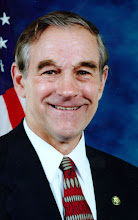
But what if it was easier? What if Hillary Clinton could simply decide that Barack Obama was not fit to be president and had the government shut his campaign down? What if President Bush decided he wanted to have a conservative in the White House in '09, and appointed Dick Cheney as the republican nominee, while eliminating the most serious challengers on the other side. Sure, to make sure it still looked like a "fair" election, maybe he would allow someone like Ralph Nader or Ron Paul to run, but in the end, his choice would end up being the victor. Yep, it would be pretty easy to hold onto power if you were in control of who could and could not run.
In Russia, that is exactly has happened. President Vladimir Putin, who is barred from running for a third term under the Russian Constitution, appointed a hand-picked successor to replace him. On March 2nd, Dmitry Medvedev, Putin's candidate, was elected to office with over 70% of the vote. Of course, its always a lot easier to win if the most formidable opponents are banned from running, protesters are beaten in the streets, and critics meet suspicious deaths. Now that he is stepping down as president, Putin is expected to take the role as Prime Minister...while his buddy Medvedev will serve as President. The most likely scenario is that Putin will be able to continue on with his current policies, while holding onto a seat of power.
This shouldn't be a surprise though. President Bush might consider Putin to be a "good man", but the west should have been able to see this coming. For years, Putin has been attempting to rebuild Russia's image by consolidating power across the region. His regime has restricted free speech and he has increased the production of military weapons, all while supporting countries like Iran and helping them enrich uranium.
It sure is an interesting way to hold on to power though, isn't it? If the bad blood between Clinton and Obama seems bad, or the antics of Anne Coulter attacking John Mccain seem intense, then you just need to have a look at what's unfolding in Moscow. Not to mention, some Americans might be unhappy with our current president, but at least they can verbally attack him without having to worry about being beaten or arrested.
One thing's for sure, Vladimir Putin is a scary man. Whoever wins the presidential election this November, he/she will have the task of dealing with Putin and the KGB...and it will not be easy.
I read a post by Iraqi Mojo earlier about Barack Obama and his surging popularity, along with the challenges he could be facing (his middle name among other things). Well anyway, it got me thinking "what if this guy actually wings the presidential election this November?" After all, he's poised to crush Hillary Clinton in the upcoming primaries, and more and more Americans seem to be desperate for "change" these days.
To give my personal opinion, I like Obama. I think he is a good, honest man who for the most part stands up for what he believes in. He's managed to attract Americans from all walks of life and seems to have the ability to be a uniter, as opposed to the divisive and polarizing figures presidents Bush and Clinton were and have been. However, as Dennis Miller put it on the O'Reilly Factor the other day, "He has everything except my vote." Indeed, I could not cast a vote for Obama, not at this time anyway.
Why? Well his position on Iraq is the main reason. He tends to embrace the far-left's stance, which is that the war was a big mistake and we need to get out as soon as possible. Obama has pledged to begin withdrawing troops soon after he takes office, and I believe that would be a disaster. If he would re-evaluate his position (and I don't think that will ever happen), I might be more supportive of him. To simply jump on the "Bush lied people died" bandwagon in an attempt to score votes is ignorant and just plain stupid. Obama can condemn Bush's handling of the war all he wants, but the fact is, ridding the world of a terrible human being like Saddam Hussein was justified and necessary. And even if he is opposed to going into Iraq in the first place, a seemingly intelligent man like Barack Obama should be able to foresee the humanitarian disaster that would tear the country apart if it does not have a functioning government and security force before U.S. troops begin packing up. If the so-called antiwar movement is alarmed by what the terrorists have been doing in Iraq these last few years, then they have a rude awakening coming if these evil people are able to operate unabated...and it would be a crying shame if that were to happen after so much progress has been made in Iraq. The horrific images of rebel militiamen terrorizing innocent people and burning villages across Eastern Congo and the forgotten jungles of Africa could be making their way into the streets of Baghdad if Iraqis, Americans (both liberal and conservative), and the international community do not find a way to work together in the best interest of the Iraqi people.
The other problem I have with an Obama presidency is his proposal to deal with countries like Iran, Syria and North Korea. Obama has pledged to meet Iranian officials face to face, and I also think that would be a big mistake. Giving legitimacy to the bloody theocracy in Tehran or the brutal regime of Bashar Assad in Syria would be harmful and counter-productive. In reality, if you are going to meet with Mahmoud Ahmadinejad, the leader of a country that has sworn to destroy Israel and arms terror groups all over the globe, why not propose a face-to-face meeting with Mullah Omar and other Taliban leaders in Afghanistan? Secondly, as strange as this sounds, President Bush is another good example of naive diplomacy. Yes, President Bush regularly holds talks with Russian President Vladimir Putin, whom he has referred to as a good man. I'm sorry Mr. President, but Vlad is not our friend...far from it in fact. While we've been trying to convince ourselves that Putin is our friend, he has consolidated power in Russia and has supported some of the world's most dangerous men, like Kim Jong Il in North Korea and Hugo Chavez in Venezuela. Numerous political opponents have also met suspicious deaths, and Russia's recent acquisition of new weaponry certainly raised questions. Therefore, if Barack Obama decided to buddy up with Ahmadinejad and reach a mutual understanding regarding his country's nuclear program, who to say a similar debacle will not happen?
In the end, Barack Obama may be the right man to solve some of the domestic problems going on here at home...he might even be able to serve as a uniter between the ideologues and haters in Washington who spend more time bashing each other than actually solving problems. However, his views on foreign policy are questionable, if not simply misguided and wrong.
Saturday's UNA meeting in Berkeley brought up a lot of debate and discussion over the issue of human rights here in the United States and around the world. Many issues were brought up--including the use of child soldiers in Africa and the growing number of executions carried out by China and Iran. But the meeting also touched on the issue of human rights here in the United States regarding detainees captured in Iraq, Afghanistan, and around the world. One of the guest speakers featured at the event was an American ACLU attorney who talked about the apparent use of torture, including water boarding, and how it hurts the image of the United States abroad. His message was that if the U.S. violates international law, then other countries could follow suit as well. At the end of the event, I had the opportunity to voice my opinion.
United World Analysis:
While I am largely opposed the idea of the U.S. government using torture or harsh methods of interrogation, I am just as opposed to the usual "blame America first" rhetoric. Since 9/11, the world has faced a stateless enemy that works to achieve its goals by killing innocent people--civilians, westerners, and Muslims alike. Last month, the UN headquarters was targeted by Al-Qaeda in the Algerian capital, Algiers, so its pretty clear that these people are perfectly willing to attack anyone--whether it be the UN, the US, or Muslims who fail to submit to their extreme ideology. If the world can put aside current political disputes, then its very likely we can all move forward together in the fight against global terrorism. Exploiting the mistakes of the USA among the international community is counter-productive, and there's little doubt that terrorists enjoy seeing the US and the members of the UN tear themselves apart from the inside out.
Nevertheless, the other superpowers in the world have an obligation to uphold their commitments to the Declaration of Human Rights. Look at what is happening in Russia right now, where political opponents have been systemically assassinated and democracy has fallen into its death throws.
MOSCOW (Reuters) - Former Russian Prime Minister Mikhail Kasyanov was barred on Sunday from running for president in a March election, a move he said was taken to block any real challenge to Kremlin chief Vladimir Putin's chosen candidate.
The Election Commission's decision seemed certain to stir fresh criticism by Kremlin opponents that the March 2 vote has been slanted in favor of Dmitry Medvedev, 42, the first deputy prime minister who Putin has backed to be his successor.
Kasyanov, who had little chance of winning the election, said Russia under Putin was now on "the slippery slope towards thievish totalitarianism" and urged a boycott of the vote.
Is it really fair to single out the United States while Vladimir Putin and his KGB buddies continue their stranglehold on Russia? I recently read a book entitled Blowing Up Russia by Alexander Litvenenko, a harsh critic of the current regime in Russia. Unfortunately, Mr. Litvenenko was killed in London before the book was released at the beginning of 2007. Other prominent critics have met a similar fate as well.
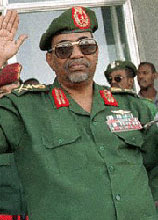
The Chinese aren't much better either, with their continued support for the blood-soaked regime of General Omar Al-Bashir in Sudan. Over the last few years, the Chinese have routinely blocked the UN security council from imposing sanctions on Sudan because of their growing economic investment in the country. It may be fitting to entitle the 2008 Beijing Olympics "The Genocide Olympics". I think its safe to say that China's support for a government that has allowed for the unrelenting slaughter in Darfur to continue is one of the worst human rights abuses in recent years. In addition, Russia and China continue to protect Iran from UN action as well.
So in the end, while it can be said that the United States has set a bad example for the international community through its sometimes controversial treatment of detainees, the other countries who wield tremendous influence in the UN need to be held accountable as well. There is no excuse for the UN to scold the USA while Vladimir Putin tracks down and kills his political opponents in Russia and China continues to support the world's most brutal dictator. The key is for everyone to work together for a more affective United Nations, which was the point I made when I had my opportunity to speak at the end of the event.
"Elections" were held in Russia today, and Russian President Vladimir Putin's party won big, taking more than 64% of the vote amid claims of fraud and intimidation. Opposition leaders are calling the election "unfair" and the west--the US and Europe--don't seem to know what to do. Putin's party now controls 350 seats of the 450 seat parliament, pretty much making the outgoing president a dictator by proxy. By rigging the elections, which the results show most likely happened, Putin can maintain his grip on power. Now, this situation in Russia obviously has nothing to do with the Russia we were dealing with in the past. In fact, the communists came in with only 11.6% of the vote, making an ideolgoy that once imposed fear and hopelessness throughout the world a victim of a new movement--a movement led by Vladimir Putin and his team of KGB buddies. Putin is also a harsh critic of the United States and the War in Iraq, even though his administration bombed the chechen people with a ferocity far greater than anything the United States has done in Iraq, and has been aiding Iran in their quest to go nuclear. Not to mention, over the past few years, people have had a tendency to die if they speak out against Putin and the KGB. Just look at Alexander Litvenenko, one of Putin's biggest critics, who was poisoned and subsequently died last year, along with about a dozen other Kremlin critics. In his book, "Blowing Up Russia", Litvenenko even alleges that the KGB carried out the 1999 Apartment bombings, which left hundreds dead and was widely blamed on Chechan militants. Looking at these events, it seems that Putin is a dangerous man who is more than likely than not up to no good.
So what does this mean for the world?
Some political analysts have suggested that Putin and his party want even more power throughout the international community, which is why Russia is alligning itself with oil-rich countries like Iran. By bringing Iran under its wing, Russia can get on top of the Middle Eastern country's vast oil reserves, in addition to the huge quantities it sits on top of already. With the current regime still in power, more weapons are sure to be flowing to Syria, Sudan, and Venezuela. Remember, Syria's missile defense systems are Russian-made, and the Russians supply many of these despotic governments with guns and fighter jets. Russian oppostionists will probably be in the cross-hairs of the KGB, and if I were Garry Kasparov, the chess player turned Putin critic, I would be scared right now. But perhaps one of the biggest worries is Russia's nuclear arsonal, which Putin has suggested could grow. The former Soviet Union has thousands of aging nuclear warheads just lying around, which creates a very real threat of terrorists like Al-Qaeda or Chechen groups acquiring a nuclear warhead. Putin, who himself faces a growing Islamist threat, should be worried about this almost as much as the West should be. The media is too busy salavating over an intelligence report suggesting Iran "may not" be building nuclear weapons to want to report on this danger that in the long run could prove to be even more threatening to global security.
As I write this, I have the O'Reilly Factor on in the background. A moment ago, Pat Buchanan was on whining about China and how China is a growing threat to the United States. Well, China is having its own infaltion problems as well as energy issues. Everyone's complaining about the Chinese, but we have put Russia on the backburner. The Russians are definitely back on stage, and don't seem like their going to wait for the War on terrorism to end before they advance their agenda. The world seems to be getting more dangerous everyday and it looks like things have the potential to get a lot worse before they get better. On one side, we have a war to win in Iraq. In Afghanistan, the Taliban have re-emerged and an Al-Qaeda presence is making itself known. Islamic miliants threaten Pakistan's stability, while genocide is raging in Darfur. Somalia has fallen back into civil war. Islamic terrorists continue to threaten American and European security and Iran still enriches uranium. Now we're dealing with our old enemies--the Russians, only instead of communists we have the dictatorial United Russian party of Vladimir Putin. I find it funny that the American government condemns Pakistani president Musharraf for imposing a state of emergwncy while his nation is under fire, but has little to say about our great ally, President Putin. We need to face the truth and accept that what Putin is doing is not going to benefit the international community, no matter how much we want to believe the Russians are on our side and are looking out for our best intersts. If he paid attention, even Ron Paul could see what's going on here.
This video from NBC news sums up the situation we're dealing with in Russia pretty well. I'm disappointed they chose to overblow the Iran report instead of cover this very big story tonight though. A country like Russia falling into the grip of a dictatorship is a big problem, and whether or not the press wants to cover it, the repercussions will ripple across the globe.